Be kind. Encourage compassion. Inspire creativity. Nurture courage. Grow your mind.
Starting a new school year can be intimidating for both parent and child, but there are steps you can take to make the transition as smooth as possible. As your child goes back to school, you can begin instilling the skills, knowledge and mindset they need to succeed in their classroom.
A growth mindset instills confidence and the belief that the basic ability can improve through hard work and determination. As the new school year begins, let’s open the doors to positivity, confidence, curiosity with these growth mindset activities.
Kindness goes a long way, but how far can a week of kindness go? This is one of those growth mindset activities that teaches children the value of being kind to others. As school starts, pick one week for your children to participate in one act of kindness a day, like opening the door for another student, inviting someone new to sit with them at lunch or sharing their favorite book or toy with another student. Have your kids keep a journal of the kind acts they engage in each day, why they chose the act, what the results were, and how it made them feel.
Reading is a great way to illustrate the difference between a growth mindset and a fixed mindset. Introducing this concept to children at an early age, kids tend to recognize the mindset of their favorite storybook characters. Children’s books present excellent opportunities to see both fixed and growth mindsets in action. Our children’s book, Guion The Lion, showcases two different mindsets through the characters Guion and Rae.
We all have that tiny voice in our head telling us negative things. Encourage your kids to spend a few minutes brainstorming the negative thoughts that they experience then practice flipping those around into a positive thought. This is a great introductory exercise that gets children familiar with the language of growth mindset. This creates simple connections to how to change how we speak to improve how we feel about ourselves.
Courage takes practice. Making mistakes is the best way to learn and grow. Allow your children to mess up, make mistakes, and fail, but be there to compliment their effort, point out what they can learn from the failure, and encourage them to try again. In doing so, this will nurture their confidence and motivate them to keep trying. Get out of your comfort zone and try new things together!
Music and social-emotional learning go hand-in-hand by enhancing cognition, providing comfort, and improving memory. Teaching your kids and students about music helps promote important social and emotional skills that will stick with them throughout their lives.
Looking to build social emotional skills through music? Check out these kid-friendly musical activities!
Whether you’re a parent, teacher, or caregiver, these activities will inspire kids to use music to make connections and explore the world around them.
In a world that often feels fast-paced and disconnected, it is essential that we teach kids the importance of compassion and kindness. Let's open the doors to compassion through the pages of these extraordinary children’s books that teach compassion:
This children’s book explores the power of kindness in our daily lives by following a young girl named Tanisha. After a series of unkind incidents make her feel sad, a classmate reflects on how to make a positive difference.
This book brings readers along to explore the life of Auggie Pullman. Auggie was born with a facial irregularity and, as the book continues, Auggie invites readers into his world and shares his experiences of being treated differently. Conveying the simple message that everyone deserves kindness and understanding, Auggie’s story is the perfect book to convey themes of empathy and compassion with your kids.
This picture book focuses on the themes of empathy and grief, following the story of Taylor, a young child who experiences a difficult event. Taylor encounters different animals who each offer a solution to alleviate the pain Taylor has been feeling. However, none of them offer the comfort Taylor really needs…until the rabbit comes along. The rabbit simply listens to Taylor’s story. Demonstrating the importance of being a calming and empathetic listener, Taylor is able to express her emotions without judgment.
Showing kindness to others benefits everyone, not just those we help! This children’s book introduces the concept of "bucket filling" as a metaphor for kindness, compassion, and positive behavior. When people are kind, considerate, and supportive, they fill others' buckets, as well as their own. On the other hand, negative actions such as bullying, teasing, or being unkind can empty someone's bucket. This story simply and effectively encourages readers to choose words and behaviors that uplift and motivate others.
This book explores the themes of mindfulness, empathy, and the shared humanity that connects us all! The book takes readers on a journey of self-discovery, reminding them that they are not defined solely by their flaws. "I Am Human" encourages children to embrace their individuality and to treat themselves and others with kindness and compassion. It highlights the importance of empathy and understanding, acknowledging that everyone makes mistakes and that forgiveness is a valuable part of personal growth.
This lighthearted picture book shares the story of a young lion named Guion who sees things a little differently from his friends. Empathy, curiosity, and adventure are the guiding themes of this picture book. As the plot develops, readers learn how appreciating and embracing others’ differences can bring great fun!
This children’s book aims to teach young readers about empathy, kindness, and understanding in a relatable and accessible way. Following a diverse group of children as they navigate various everyday scenarios, the story highlights the importance of empathy in their interactions. Through simple and engaging language, it encourages readers to recognize and value the feelings and experiences of others.
Join Curious B.E.I.N.G.s as we explore heartwarming stories that inspire children to embrace compassion as a guiding principle in their lives!
DOWNLOAD AND PRINT THE BOOK LIST NOW
Summer break is just around the corner. Are you looking for ways to keep your kids entertained and engaged? With all the extra free time at home, summer is a great time to learn through play. From outdoor adventures to indoor projects, these summer activities are sure to spark curiosity in your kids this summer.
If you're stuck at home looking for a hands-on activity for kids, a scavenger hunt outside is the perfect option! This fun activity gets kids moving as they search for a location that has another clue waiting! A toy or treat waits at the final spot. Scavenger hunts empower kids to complete a task independently and learn how to follow steps in order. The scavenger hunt can be as simple as asking all participants to find items like a flower, leaf and a rock in the park or backyard.
Summer reading challenges are an engaging way to get your kids to read by offering them rewards. Talk with your kids and choose a number of books that they want to read by the end of summer. Whether the reading is done on their own or maybe an adult, this challenge allows kids to associate reading with positive rewards and hopefully lead to a lifetime love of reading.
The sidewalk scribble add-on is the perfect summer spinoff to the classic scribble add-on activity. One person begins the game by drawing a scribble on the sidewalk. Each person in the group adds something to the scribble and passes it to the next person until a picture forms!
Set up an age-appropriate obstacle course in your backyard for a great physical activity that also promotes curiosity in your kids. Obstacle courses can help develop sensory processing and problem-solving skills. Get creative – anything from pool noodles to trampolines can be used for an obstacle course.
Whether you're a parent, teacher, or caregiver, these activities will inspire kids to ask questions, make connections, and explore the world around them.
Teachers are entrusted with one of the most important tasks - teaching and influencing the next generation of curious minds. How do you plan to show your appreciation for them?
With Teacher Appreciation Week approaching on May 8-12, now is a great time to brainstorm some thoughtful and creative ways to express your gratitude for your children's teachers. We’ve rounded up a few gifts that can be given year-round, from beginning and end-of-school-year gifts to holidays and other special occasions.
Join Curious B.E.I.N.G.s in celebrating Teacher Appreciation Week by surprising the educators in your kids’ lives with some of these great gift ideas.
Exploring curiosity is key for learning! In fact, Walden University explains that you’re more likely to remember information on a subject when you’re curious about it - this is especially true for kids.
Kindness is not only contagious, but teachable, too! Children learn better through hands-on learning, like first-hand experiences performing acts of kindness. Performing acts of kindness teaches our kids the importance of compassion and selflessness. As parents, we can model acts of kindness, as well as encourage our kids to seek out opportunities to be kind.
No matter where you’re going or what you’re doing, traveling puts your kids in new places with new opportunities to perform acts of kindness. The next time you’re headed on a family vacation, join Curious B.E.I.N.G.s in creating a kinder world!
Keep your kids entertained and busy while encouraging kind acts with this kid-friendly acts of kindness checklist that can be completed whether traveling by car, plane or train!
Exploring curiosity is key for learning! In fact, Walden University explains that you’re more likely to remember information on a subject when you’re curious about it - this is especially true for kids.
Curiosity is so much more than asking questions. It teaches children the power of being observant and exercising their active mind, and it can even add to the excitement of their young lives. Curiosity has even been proven important in nurturing healthy friendships. No matter what age your students are, encourage them to think outside of the box and express their creativity!
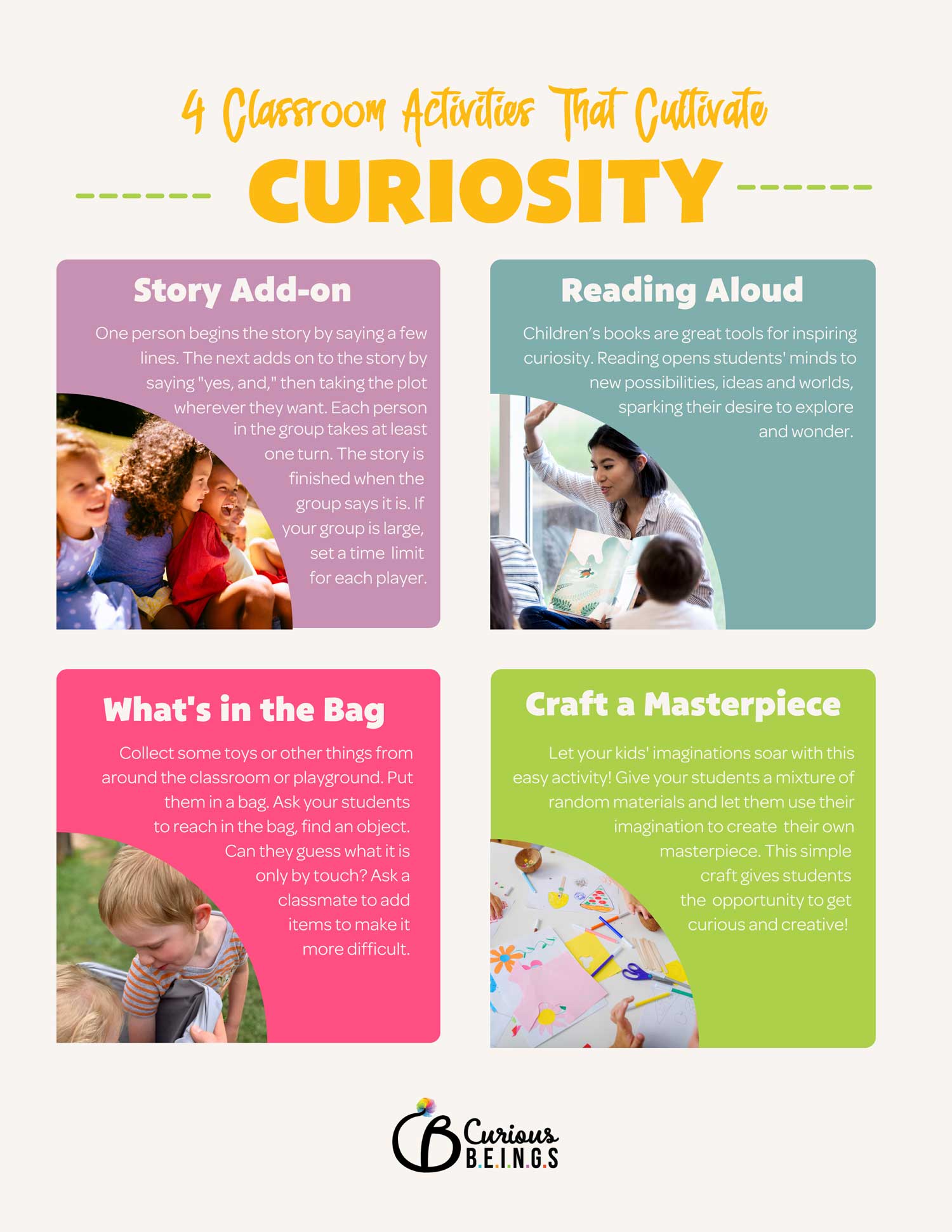
Integrating curiosity into your course curriculum can greatly improve learning outcomes in the classroom. Join Curious B.E.I.N.G.s in cultivating curiosity in the classroom with these four entertaining activities that are perfect for a classroom setting.
In this classroom activity one person begins the story by saying a few lines. The next adds on to the story by saying "yes, and," then taking the plot wherever they want. Each person in the group takes at least one turn. The story is finished when the group says it is. If your group is large, set a time limit
Children’s books are great tools for inspiring curiosity. Reading opens students' minds to new possibilities, ideas and worlds, sparking their desire to explore and wonder.
Collect some toys or other things from around the classroom or playground. Put them in a bag. Ask your students to reach in the bag, find an object. Can they guess what it is only by touch? Ask a classmate to add items to make it more difficult.
Let your kids' imaginations soar with this easy activity! Give your students a mixture of random materials and let them use their imagination to create their own masterpiece. This simple craft gives students the opportunity to get curious and creative!