Be kind. Encourage compassion. Inspire creativity. Nurture courage. Grow your mind.
Forming friendships is a pivotal experience in childhood-a path that should welcome children of every ability. While connections with children with disabilities might sometimes be under-appreciated, they possess a remarkable capacity to enrich the lives of all children involved.
As a mom to 3 children, including my oldest son who happens to have Down syndrome, I've witnessed firsthand the power of inclusive friendships. In reality, inclusive friendships mutually benefit children with disabilities as well as their nondisabled peers.
Inclusive friendships serve as a powerful lesson in empathy. For nondisabled children, these relationships offer a firsthand glimpse into the lives of their peers with disabilities, fostering a deep sense of compassion and understanding. Meanwhile, children with disabilities feel seen and valued, bolstering their sense of belonging. Together, they learn that empathy transcends differences, uniting us in our shared humanity.
These friendships are a playground for developing social skills. Children with disabilities gain opportunities to navigate social cues and communication in a supportive environment, enhancing their interaction capabilities. Simultaneously, their nondisabled friends learn to adapt and communicate in diverse ways, enriching their social toolkit and preparing them for a world that values versatility in human interaction.
Inclusive friendships affirm the value of every child, boosting self-esteem and fostering a strong identity. This acceptance encourages children with disabilities to explore their potential with confidence. For nondisabled children, the experience of supporting their friends contributes to a sense of purpose and pride, nurturing their growth into independent and compassionate individuals.
Through the lens of inclusive friendships, children appreciate the vast tapestry of human experience. These relationships demystify differences, teaching all children to celebrate diversity as a source of strength and enrichment rather than a barrier.
The magic of inclusive friendships lies in their ability to transform lives on both sides. These friendships teach empathy, improve social skills, boost confidence, and help everyone appreciate the value of diversity. They show our children how to build a world that's more accepting and kind.
By encouraging these friendships, we're not just helping individual kids; we're helping shape a future where everyone feels they belong. It's about making sure every child knows they are important and valued - no matter their abilities.
Let's support and celebrate these friendships! They are key to creating a more inclusive society where every person is welcomed and included. By focusing on what brings us together, we can help our children lead the way to a world that recognizes and values everyone.
Curious B.E.I.N.G.s are who we aspire to be, and we want to take you and your kids along for the adventure of leading a kind and caring life. As Curious B.E.I.N.G.s, we believe it's important to.
Will you join us? Explore our website, follow Curious B.E.I.N.G.s on Facebook and Instagram and subscribe to the Curious B.E.I.N.G.s newsletter to receive engaging, educational resources that will inspire the next generation of Curious B.E.I.N.G.s.
Ready to embark on a journey that transcends limitations and focuses on the boundless potential within each individual?
In raising three children, including my oldest son who happens to have Down syndrome, it has become clear to me that celebrating abilities holds the key to fostering inclusivity, empathy, kindness and a world where everyone feels valued for who they uniquely are.
However, I’ve also found that the conversation around people with special needs is often all too focused on the individual’s disabilities rather than their incredible abilities. Will you join me in shifting the conversation to celebrate all abilities that make each one of us truly extraordinary?
In a world that sometimes fixates on limitations, let us be the champions of a narrative that uplifts, inspires, and celebrates the remarkable abilities inherent in every child and every individual. By focusing on the strengths, talents, and potential within ourselves and others, we can build a society where diversity and differences are not just accepted but truly celebrated.
Will you join Curious B.E.I.N.G.s in embracing a future where the emphasis is on extraordinary abilities rather than disabilities?
Curious B.E.I.N.G.s are who we aspire to be, and we want to take you and your kids along for the adventure of leading a kind and caring life. As Curious B.E.I.N.G.s, we believe it’s important to…
Will you join us? Explore our website, follow Curious B.E.I.N.G.s on Facebook and Instagram and subscribe to the Curious B.E.I.N.G.s newsletter to receive engaging, educational resources that will inspire the next generation of Curious B.E.I.N.G.s.
In the ever-evolving landscape of inclusion, parenting brings its unique set of challenges. Yes, it's a journey that requires patience, understanding, and sometimes a bit of a learning curve. But it's also an incredibly rewarding path, one that shapes not just our children, but the community and world around us. Let's take this journey with a sense of purpose and hope.
Here are some areas where we, as parents, can make a significant impact:
1. Challenging Stereotypes and Stigmas: Yes, we often find ourselves correcting misconceptions about Down syndrome or other differences. This isn't just a challenge; it's a chance to spread understanding and acceptance, making the world a bit more open-minded for our kids.
2. Advocating for Educational Equality: It can be tough ensuring that our children get the inclusive education they deserve. But every step we take in advocating for their needs paves the way for a more understanding and diverse learning environment.
3. Fostering Social Inclusion: Helping our children build friendships in inclusive environments might require extra effort. But it's these efforts that build a more compassionate and empathetic community, starting from the playground.
4. Dealing with Discrimination: It's disheartening when discrimination occurs, but these moments are opportunities to teach resilience and celebrate uniqueness. Each challenge overcome is a step towards a more inclusive society.
5. Instilling Cultural Sensitivity: Teaching our children to appreciate diverse cultures and perspectives is essential in today's interconnected world. It's not just about raising aware individuals; it's about nurturing global citizens.
6. Promoting Accessibility for All: Ensuring accessibility extends beyond the physical to embrace cognitive and neurodivergent inclusivity. It's about making sure that spaces, programs, and resources are welcoming and accessible to individuals with all types of abilities and ways of interacting with the world. This endeavor is not just about advocating for ramps and elevators but also about creating environments that are supportive and understanding of sensory sensitivities, learning differences, and communication barriers. By championing for comprehensive accessibility, we're not just opening doors; we're nurturing an environment where every person can thrive in their own unique way.
Parenting in the age of inclusion is indeed filled with challenges, but each challenge overcome is a triumph. The effort we put into raising our children in this inclusive era is not just for their benefit; it shapes the world into a more accepting, diverse, and beautiful place. Every step we take, no matter how small, contributes to a future where every individual is valued and celebrated. So, let's embrace this journey with optimism and determination, for our children, our community, and the world.
Empathy is more than just a soft skill–it's a cornerstone for building connections and understanding others' perspectives. In an era where inclusivity is increasingly emphasized, teaching empathy becomes crucial. As parents, we have the opportunity and responsibility to instill this quality in our children, creating a foundation for a world that celebrates every individual’s abilities and perspectives. By teaching my children empathy, I hope to prepare them to navigate a diverse and inclusive world.
Wondering where to start? Check out these blog posts for tips on teaching empathy and inclusion:
Curious B.E.I.N.G.s are who we aspire to be, and we want to take you and your kids along for the adventure of leading a kind and caring life. As Curious B.E.I.N.G.s, we believe it’s important to…
Will you join us? Explore our website, follow Curious B.E.I.N.G.s on Facebook and Instagram and subscribe to the Curious B.E.I.N.G.s newsletter to receive engaging, educational resources that will inspire the next generation of Curious B.E.I.N.G.s.
As Valentine's Day approaches, love is in the air, and what better way to celebrate than by fostering empathy within your family? Empathy is the bridge that connects us all, regardless of our backgrounds or abilities, and by teaching it, I believe we’re nurturing a world where children of all abilities are embraced for the incredible individuals they are.
Raising my son, Guion, who happens to have Down syndrome, I've come to realize the profound importance of teaching empathy to children. In a world that often struggles to understand and embrace differences, instilling empathy becomes not just a virtue but a necessity. When my kids learn to empathize with their sibling or friend who faces unique challenges, they develop a genuine understanding of diversity and inclusivity. One powerful and enjoyable method to nurture empathy at home is through play.
Let’s explore some easy ways you can nurture empathy in your family, plus an idea for a fun activity that will spread love and warmth this Valentine's Day!
Time to put these empathy-building tips into practice with a special Valentine's Day craft.
Gather the material:
Let’s craft!
This Valentine's Day, go beyond the traditional expressions of love and use the occasion to strengthen the bonds within your family. By incorporating empathy-building activities and engaging in play, you not only create cherished memories but also nurture a compassionate and understanding family. Let the Crafty Love Notes Activity serve as a beautiful reminder that love and empathy are essential ingredients for a happy family life.
Curious B.E.I.N.G.s are who we aspire to be, and we want to take you and your kids along for the adventure of leading a kind and caring life. As Curious B.E.I.N.G.s, we believe it’s important to…
Will you join us? Explore our website, follow Curious B.E.I.N.G.s on Facebook and Instagram and subscribe to the Curious B.E.I.N.G.s newsletter to receive engaging, educational resources that will inspire the next generation of Curious B.E.I.N.G.s.
Brace yourselves for this truth: It’s okay for kids to see and do things differently!
While we all know this down deep, it can be difficult to remember in a world so full of comparison that pushes us (or even our kids) to try to be something we’re not (or they’re not) in order to be like someone else.
The reality is — we’re all different. We look different, we have different personalities, we like different foods, we enjoy different activities, and we see the world around us differently. Similarities may bring us together, but it’s our differences that make this world a beautiful and colorful place. In my journey with my incredible son Guion, who happens to have Down syndrome, I've come to cherish the beauty of encouraging my kids to see and do things differently while learning to embrace the different perspectives and abilities of others.
Do you want to teach your kids to see the world differently and celebrate uniqueness? This doesn't have to be tricky at all. In fact, it's as simple as sparking a bit of curiosity and embarking on a new adventure together. Here are a few tips from my experience raising my three kids:
Teaching kids to see the world differently and celebrate uniqueness not only fosters a positive and inclusive mindset but also lays the foundation for a more compassionate and understanding society.
Teaching kids to see the world differently and celebrate uniqueness is a gift that keeps on giving. By cultivating curiosity, exposing them to diverse stories, fostering a growth mindset, and promoting inclusion, we empower our children to become kind, empathetic and inclusion individuals who appreciate the rich tapestry of humanity. As parents, educators, and caregivers, it is our collective responsibility to nurture a generation that not only sees the world differently but also values and celebrates the beauty of every unique individual!
Curious B.E.I.N.G.s are who we aspire to be, and we want to take you and your kids along for the adventure of leading a kind and caring life. As Curious B.E.I.N.G.s, we believe it’s important to…
Will you join us? Explore our website, follow Curious B.E.I.N.G.s on Facebook and Instagram and subscribe to the Curious B.E.I.N.G.s newsletter to receive engaging, educational resources that will inspire the next generation of Curious B.E.I.N.G.s.
In the journey of raising kind, compassionate and empathetic kids, nurturing imagination through play becomes a powerful tool. Imagination and curiosity are not just gateways to creativity–they are also bridges that lead to empathy.
When children engage in imaginative play, they step into different roles and perspectives, fostering a deeper understanding of emotions and experiences. Curiosity propels kids to ask questions, seek understanding, and connect with the feelings of others. As parents, we can nurture our kids’ imaginations through purposeful play.
Play is the natural language of children, and it serves as a medium through which they can express their thoughts, feelings, and ideas. Through play, kids learn to navigate the world around them, solve problems, and develop crucial cognitive skills. It is a fun and friendly space where their imaginations can run wild, and they can explore limitless possibilities!
Ready to nurture imagination through play? Check out these practical tips!
As we guide our children through the wonderful world of imaginative play, let's recognize its potential to shape empathetic individuals. Imagination and curiosity serve as the cornerstones of empathy, allowing children to walk in the shoes of others and celebrate all the abilities and perspectives of others. Let the play begin, and watch as curiosity and imagination pave the way for a future filled with kindness and empathy!
Curious B.E.I.N.G.s are who we aspire to be, and we want to take you and your kids along for the adventure of leading a kind and caring life. As Curious B.E.I.N.G.s, we believe it’s important to…
Will you join us? Explore our website, follow Curious B.E.I.N.G.s on Facebook andInstagram and subscribe to the Curious B.E.I.N.G.s newsletter to receive engaging, educational resources that will inspire the next generation of Curious B.E.I.N.G.s.
This year was a big year for Curious B.E.I.N.G.s. Yes, we grew our product line and expanded into Curious B.E.I.N.G.s, but that’s not all I’m here to reminisce on today. Today, I express gratitude for how we’ve grown as a brand and celebrate the ways, both big and small, I think we’ve made this beautiful, colorful world a better place. Following the outline we provided in a recent blog post, will you reflect with me?
First and foremost, we’re thrilled to celebrate three years as a small, woman-owned business since the launch of “Guion The Lion.” We are extremely grateful for all the influencers, teachers, schools, local retailers, guest bloggers, partners and customers who have shared our products and helped spread our message and mission this year. Thank YOU for helping us inspire the next generation of Curious B.E.I.N.G.s–one post, one kid-friendly activity, one purchase, one partnership at a time.
We are grateful to for the opportunities this year has brought us, particulary the privilege of visiting and sharing our message with schools, like Delano Elementary School. We’re heartened by the outpouring of support and encouragement from our community–ranging from messages on social media to emails telling us that “Guion The Lion” is a child’s favorite bedtime book, as well as news that “Guion The Lion” has been selected as favorite book of a class’s star student and picked as the book for another classroom’s mystery reader. We even inspired a song written by our safari guide, Promise, that blends English and Swahili. How cool is that! All of these bring our team so much joy and fuels our passion to continue the journey!
At the heart of our brand is our commitment to kindness. We are grateful to have had the opportunity to spread this message of kindness by donating over 750 copies of “Guion The Lion” to various schools and classrooms. Additionally, we contributed $2,500 to Down syndrome research in 2023. Our hope is that the message of “Guion The Lion” and our support for Down syndrome research makes a difference in making the world a more inclusive, colorful and kind place.
We did get curious this year! In an effort to expand our product line, we excitedly polled a group of educators to explore what type of resources would be most beneficial to them and their classrooms. The result? The NEW Curious B.E.I.N.G.s Pilot School Program, which includes lesson plans for educators to use in their classrooms.
Inclusive instances are our favorite! We embraced several holidays that champion inclusion and celebrate all abilities, including Down Syndrome Awareness Month, World Down Syndrome Day, Autism Acceptance Month, International Day of Disabilities, World Hello Day and Disability Pride Month. Beyond these celebrations, we’ve consistently shared several resources and activities for parents and teachers aimed at fostering an understanding of inclusion on our blog and social media accounts. These efforts reflect our dedication to building a world that acknowledges and values EVERY individual’s unique contributions.
Last but certainly not least, this year has been marked by some courageous steps for our brand and business. A significant milestone was the launch of launching Curious B.E.I.N.G.s, an expansion that saw our product line grow to include Random Acts of Kindness Cards, A Story Coloring Book, three Mindful Activity Books, and the introduction of Swahili and Spanish translations of “Guion The Lion.” These initiatives were driven by the realization that our mission extends beyond a children’s book—it’s about sharing a broader message and inspiring a wide spectrum of encouragement and learning. Each step reflects our commitment to reaching more hearts and minds in impactful ways.
All in all, 2023 was a year of growth, including both highs and lows, and we’re excited to continue inspiring the next generation of Curious B.E.I.N.G.s in 2024. Happy New Year!
“I CAN’T do that!” Sound familiar? It for sure is a frequent argument in our home. We’ve all experienced those moments when our kids refuse to try something new because they “can’t.” My own response taught by my parents has continued to be “Can’t never could!”
While we know they may be scared because new things are scary - you don’t want to fail, you don’t want to look silly, etc., BUT kids will never know if they like something or that they are good at something unless they TRY. As parents, we know that they can’t, YET, so how do we teach this mindset?
The concept of "yet" has the power to transform challenges into opportunities for learning and resilience. Guiding our kids to understand the significance of "yet" can set the stage for a lifetime of curiosity, perseverance, and success. Here are a few tips for incorporating the power of “yet” into your parenting toolkit:
Teaching your children the power of "yet" is a gift that will serve them throughout their lives. By instilling a growth mindset early on, you empower them to embrace challenges, persist in the face of setbacks, and view learning as a lifelong journey. Remember, it's not about being perfect—perfection can be debilitating and daunting. As parents, we have the incredible opportunity to shape our children's mindset, equipping them with the tools they need to navigate the complexities of the world with resilience and optimism.
Curious B.E.I.N.G.s are who we aspire to be, and we want to take you and your kids along for the adventure of leading a kind and caring life. As Curious B.E.I.N.G.s, we believe it’s important to…
Will you join us? Explore our website, follow Curious B.E.I.N.G.s on Facebook andInstagram and subscribe to the Curious B.E.I.N.G.s newsletter to receive engaging, educational resources that will inspire the next generation of Curious B.E.I.N.G.s.
As the year draws to a close, it's the perfect time for reflection and celebration of the journey we've taken together as a family. As a mom, I find immense joy in recognizing how my kids displayed kindness, curiosity, inclusion, and courage throughout the year. Good grades and athletic achievements are great and all, but it’s really these traits that I hope they repeat year after year. However, this is often easier said than done as these instances of kindness or courage are harder to pinpoint than an “A+” on a spelling test.
Reflecting on how your kids showcased these traits is a wonderful way to highlight their personal growth and encourage values that will stay with them throughout their lives. Here are a few tips for reflecting on and celebrating your kids’ growth at the end of the year:
Make it fun and festive! Send an invitation to your kids so they can not only come prepared to reflect on the year, but also get excited about it! Decorate, prepare snacks, bake a cake – throw a party!
Begin the review by expressing gratitude for the time spent together as a family throughout the year. Highlight specific moments that brought joy, laughter, and a sense of togetherness. This sets a positive tone for the discussion!
Encourage your kids to share instances where they demonstrated kindness. Reflect on moments when they helped a friend, shared a toy, comforted a sibling, showed empathy towards someone in need, or participated in charitable activities. This not only boosts their confidence but also reinforces the importance of empathy and compassion.
Explore the curious side of your kids by discussing their interests and passions. Share in their excitement about new hobbies, books, or projects they undertook. Cultivating curiosity is essential for lifelong learning, and acknowledging their efforts encourages a love for exploration.
Discuss inclusivity by recalling instances where your kids made an effort to include others who are different from themselves, whether at school, in the neighborhood, or during family gatherings. Emphasize the importance of creating a welcoming environment for individuals with all abilities and how these actions contribute to building strong, supportive communities.
Pat your kids on the back for how they displayed courage throughout the year. Did they confront a fear? Do something despite being anxious about it? Perform in front of a crowd? Help them remember how courageous they were despite their doubt or fear and how they overcame it. Whatever the courageous step, congratulating them for their effort, rather than their ability is a great way to encourage a growth mindset and nurture courage.
An end-of-year reflection centered on kindness, generosity, curiosity, inclusivity and courage is a heartwarming way to celebrate your children's growth. By focusing on these values, you not only reinforce positive behavior but also instill lifelong lessons that contribute to the development of compassionate, empathetic individuals.
As a mom, I can attest to the joy and fulfillment that come from witnessing my children's journey of becoming kind-hearted, curious, inclusive, growth-minded individuals. Here's to another year of growth, love, and shared moments as a family!
Curious B.E.I.N.G.s are who we aspire to be, and we want to take you and your kids along for the adventure of leading a kind and caring life. As Curious B.E.I.N.G.s, we believe it’s important to…
Will you join us? Explore our website, follow Curious B.E.I.N.G.s on Facebook andInstagram and subscribe to the Curious B.E.I.N.G.s newsletter to receive engaging, educational resources that will inspire the next generation of Curious B.E.I.N.G.s.
As I approach my 50th birthday, I am grateful for my adventures in Africa, especially in Tanzania. The most special of these trips have been the ones that I experienced with my three kids. Watching the wonder in their eyes as we explore this incredible continent, , has made it all the more special.
In 2020, I introduced "Guion The Lion," a children’s book that encourages kids to be open-minded and accepting of differences. Little did I know that our trip to Tanzania in December 2022 would inspire a new chapter for my book.
During our December trip, Promise and Paul, our safari guides, formed a wonderful connection with our whole family, but especially Guion. I always bring a few copies of my book whereever I go and shared "Guion The Lion" with them. They immediately connected with the story, its message, and Guion. Incredibly a few months later, Promise sent me a song he’d written called “Guion The Lion” that incorporates both English and Swahili – he even had my niece, Wilson, sing as well just like our original song. Yes, there were tears! It was such a meaningful and thoughtful gift that I knew I had to reciprocate; I decided to translate our book into Swahili.
Fast forward to September 2023, when I climbed Kilimanjaro with friends. I brought along this special load of Swahili "Guion The Lion" books to share. At the beginning of our trip, I returned to Shanga, a social enterprise that employs people with disabilities who create beautiful crafts (my house is full of them now). Their mission of inclusion deeply resonated with me and it was important to share "Guion The Lion" with these artisans. Their smiles and hugs Were the best rewards.
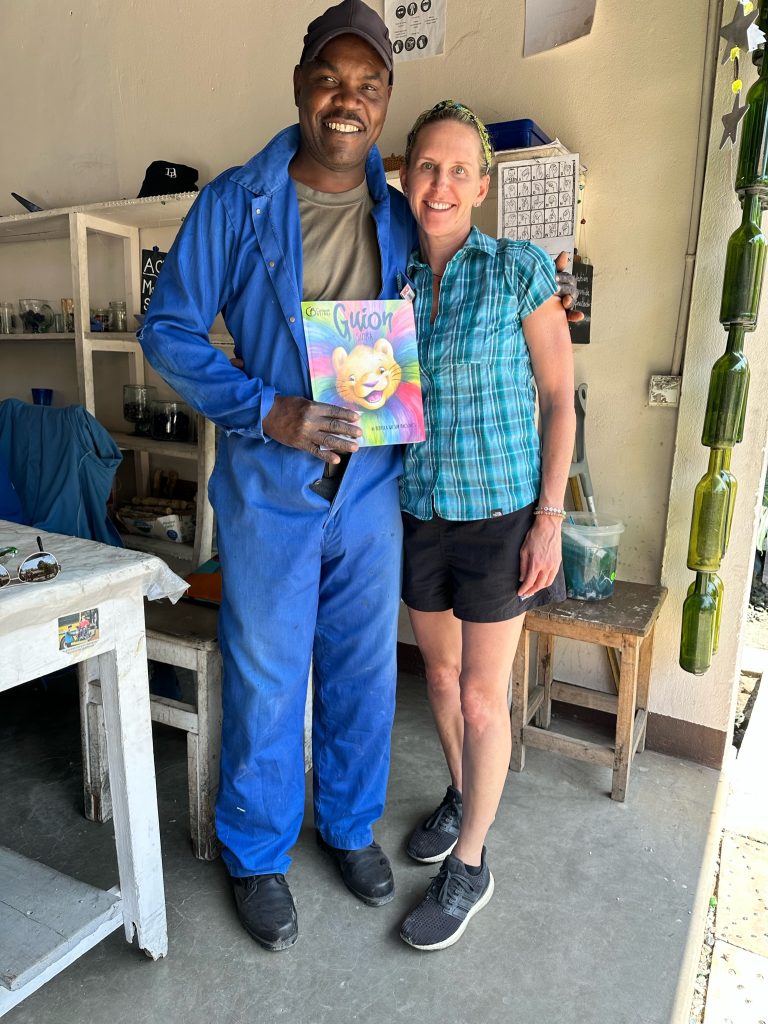
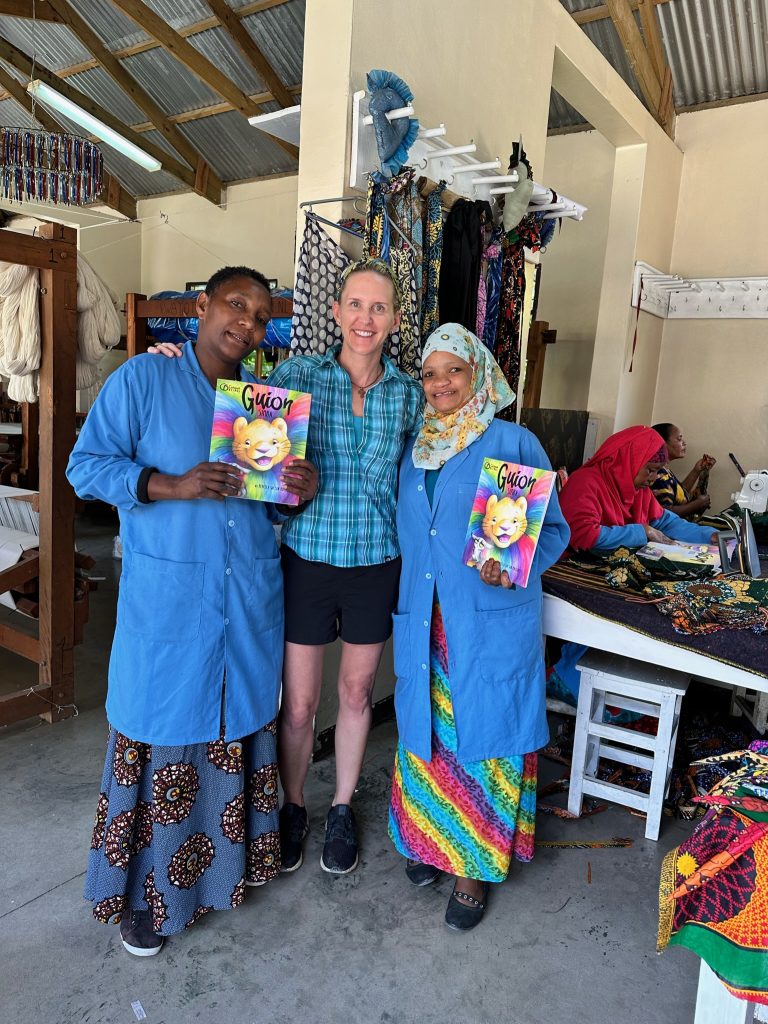
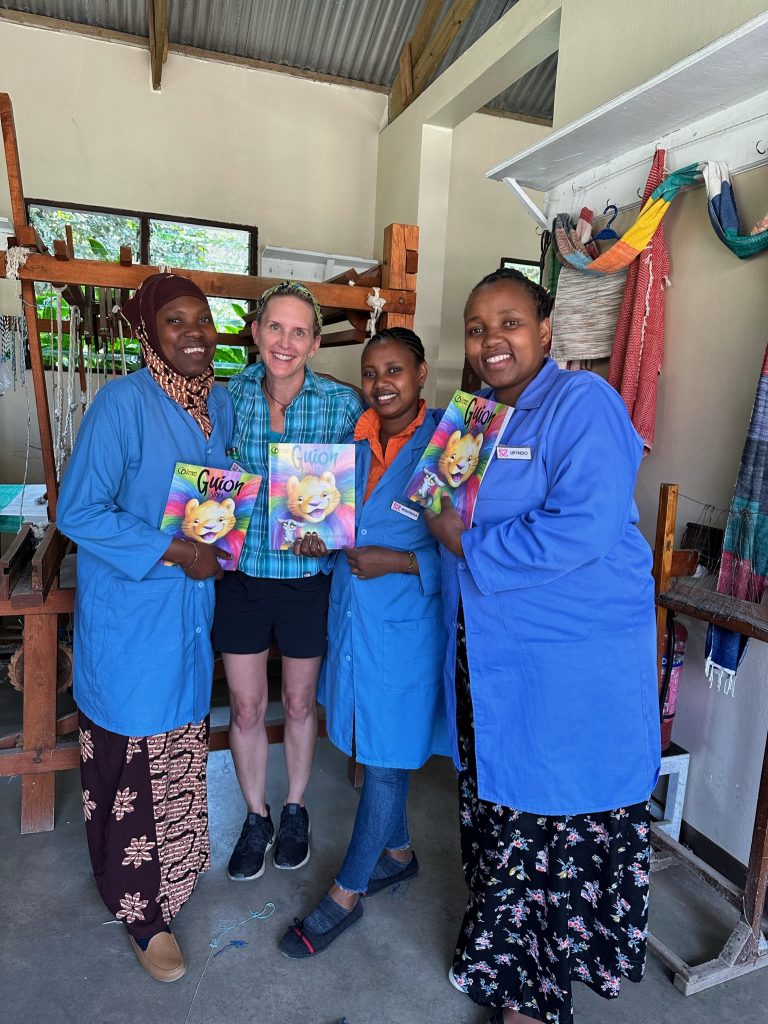
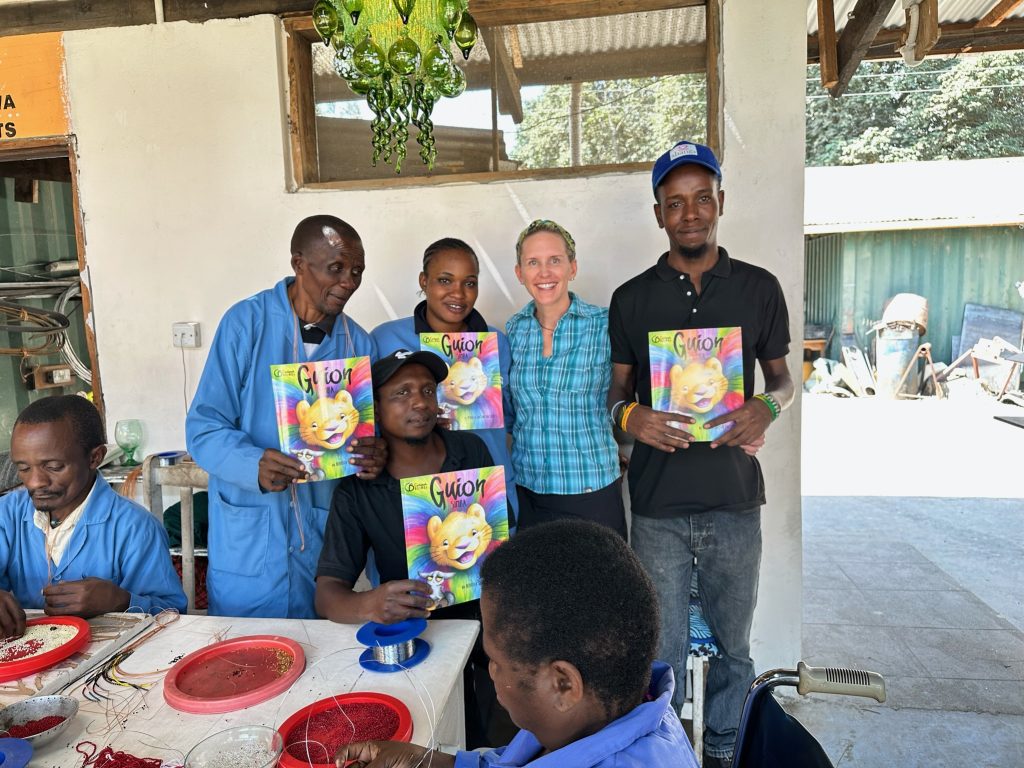
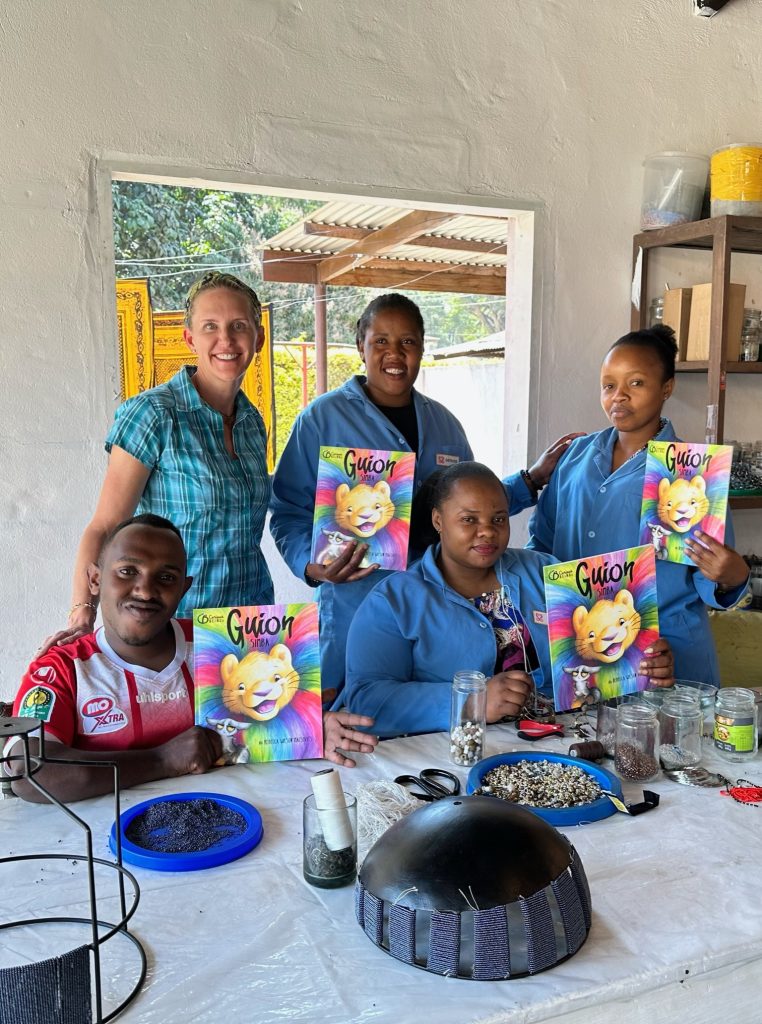
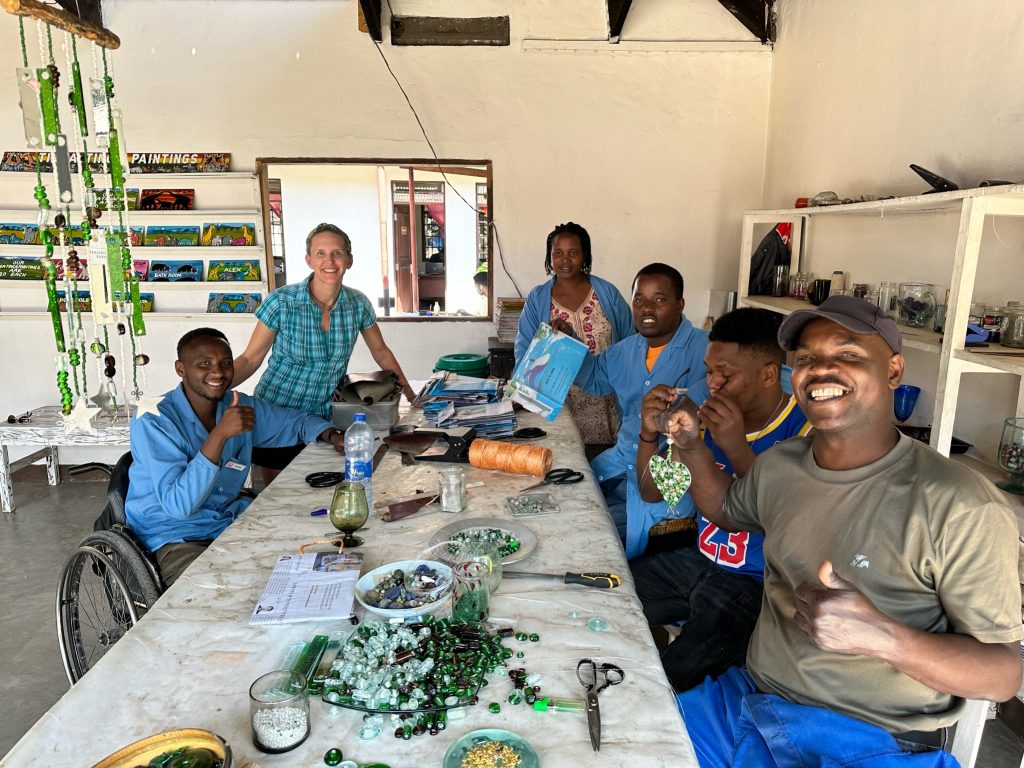
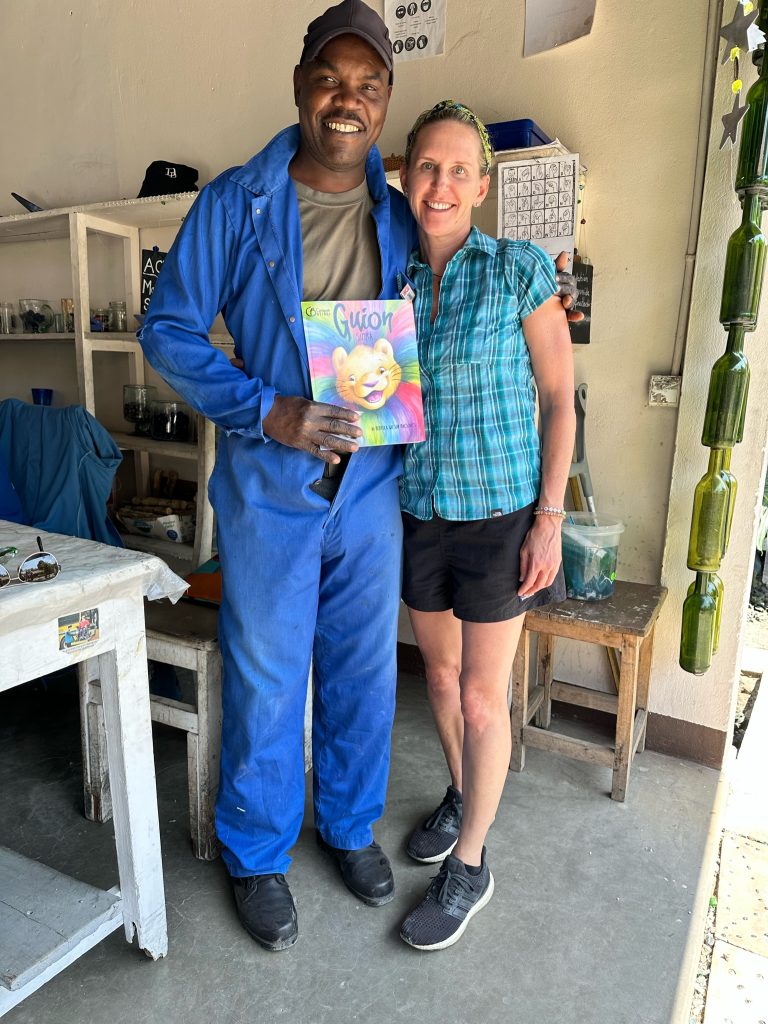
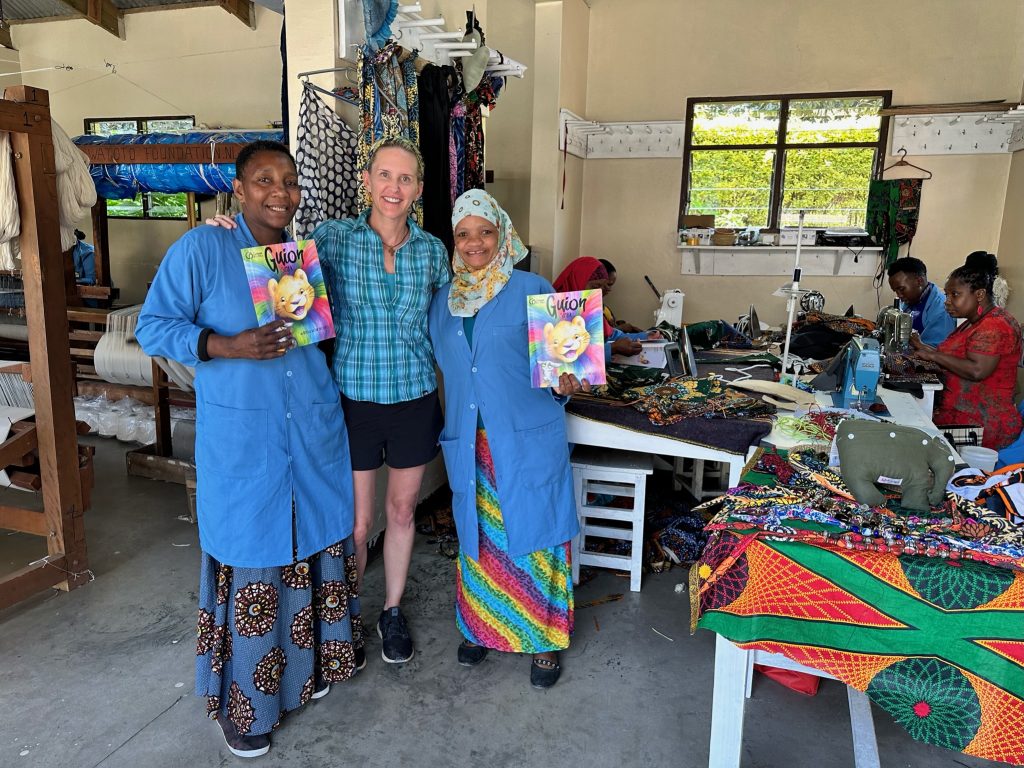
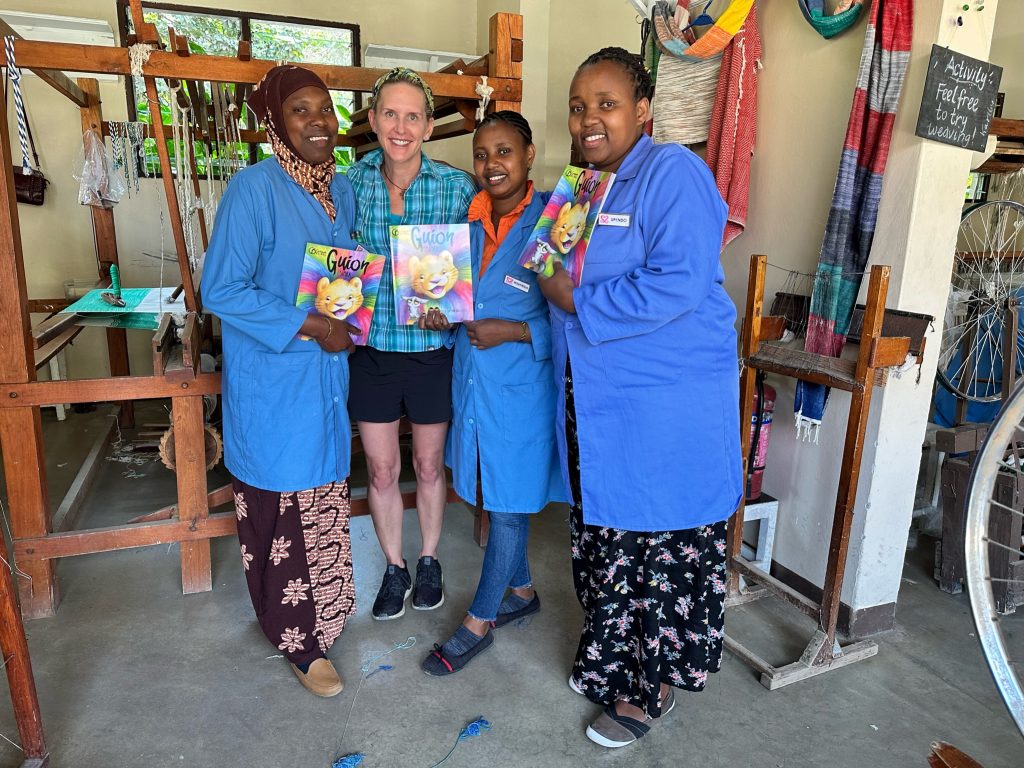
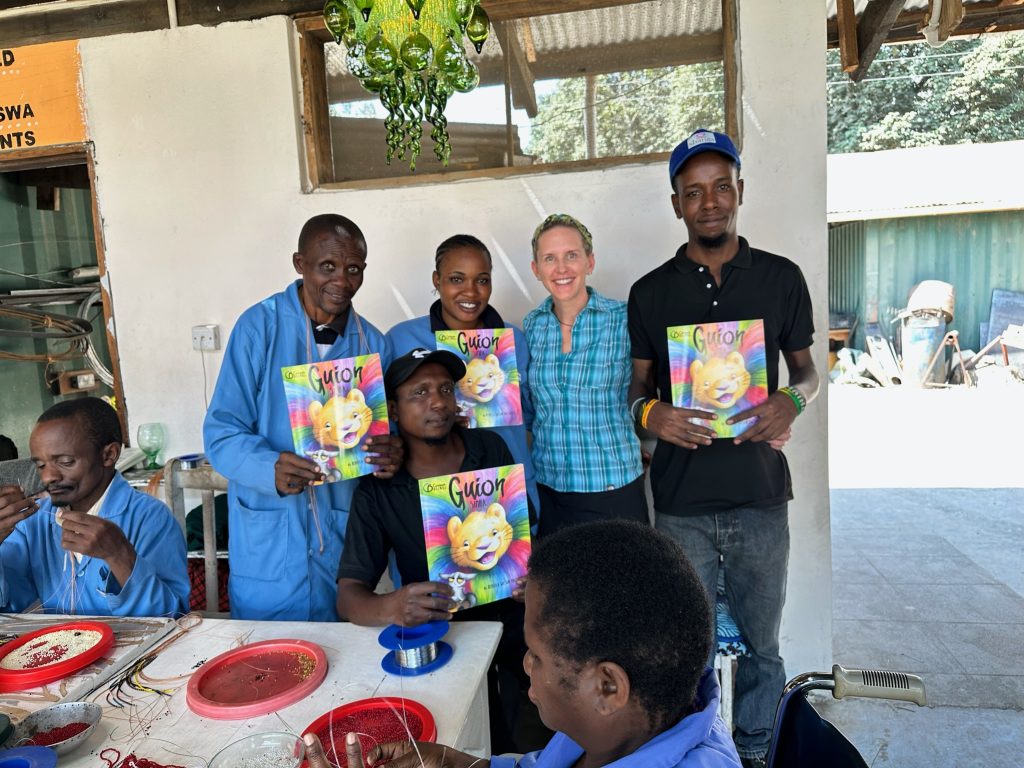
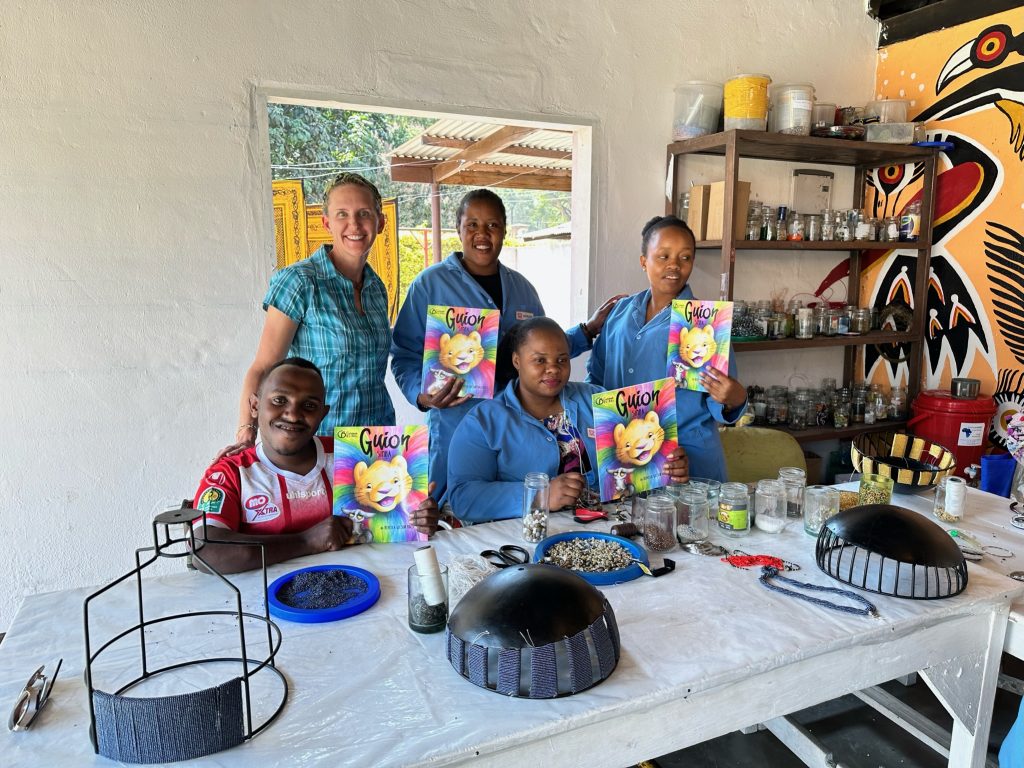
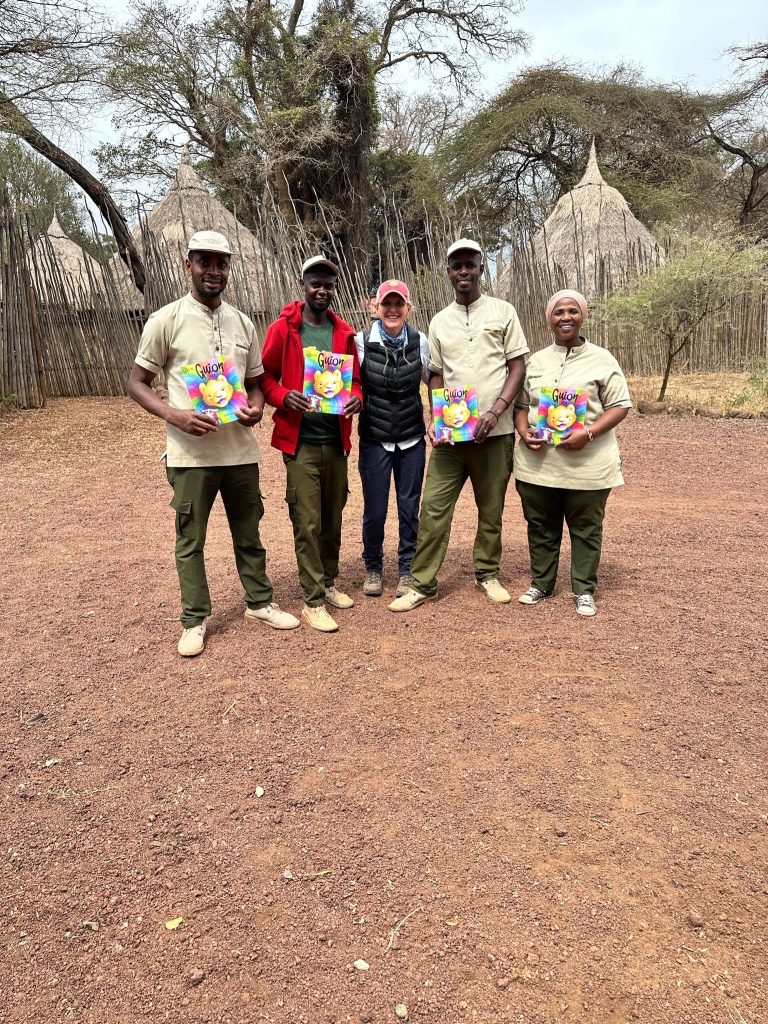
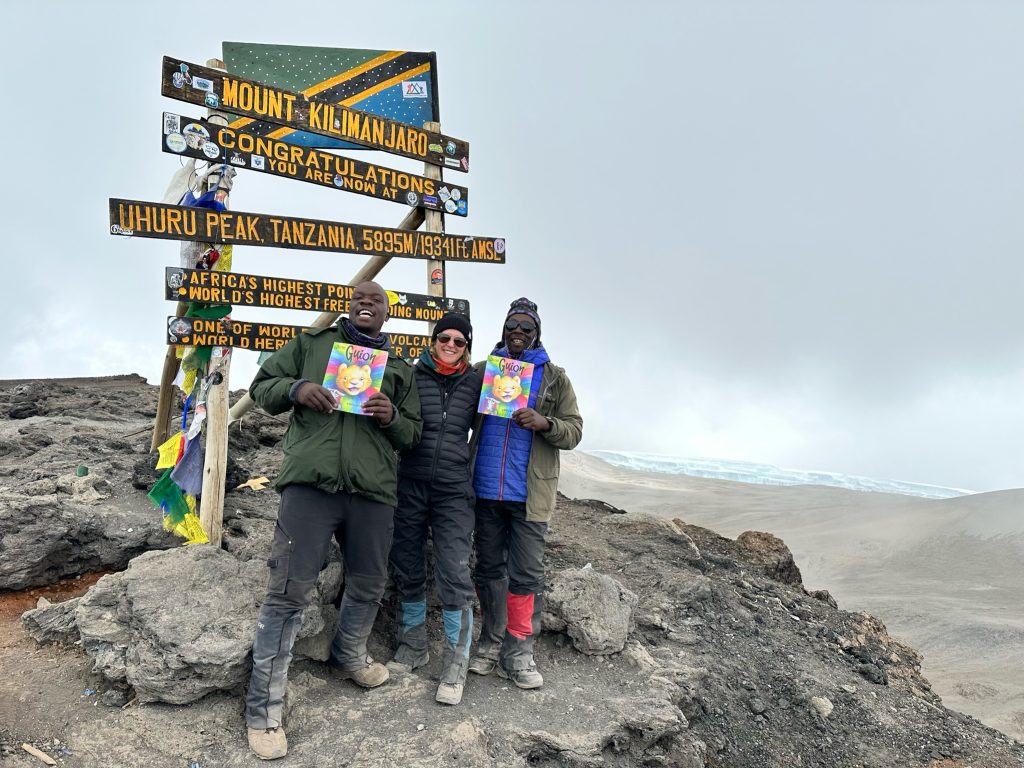
My love for Tanzania spans over two decades, and it's a testament to how travel, connections, and stories can spread the values of inclusivity and compassion. Africa, particularly Tanzania, holds a special place in my heart, and I'm excited to see the positive impact of "Guion The Lion" in this remarkable part of the world. I'm grateful for all that Tanzania has given me over the years, and I'm glad I can give a little something back!
