
Be kind. Encourage compassion. Inspire creativity. Nurture courage. Grow your mind.
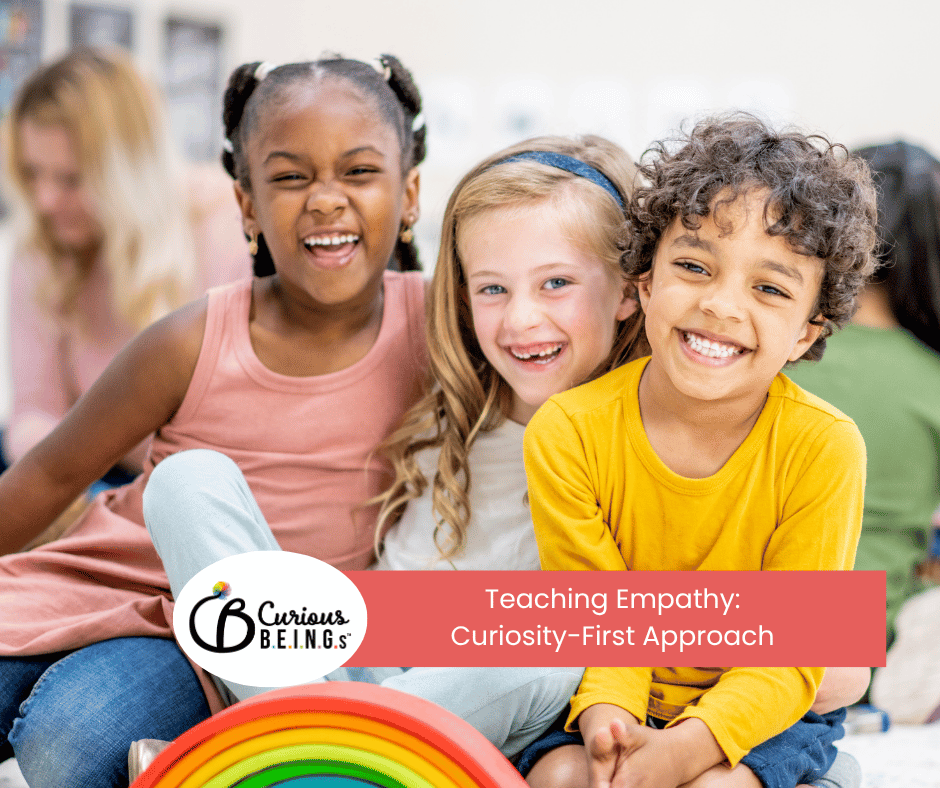
Teaching empathy to children is one of the most powerful things adults can do to build inclusive, compassionate communities. Research shows empathy skills begin developing as early as age 3 and with the right activities, parents and educators can nurture this superpower intentionally. One of the simplest and most effective ways to build empathy in kids is through play-based perspective-taking, like the "What I Think I Know vs. What I Learned" guessing game.
Empathy is the ability to recognize and share the feelings of another person, to walk in their shoes and see the world through their eyes. For children ages 3-10, developing empathy lays the foundation for:
- Making and keeping friendships
- Navigating conflict with kindness
- Appreciating differences in others
- Building inclusive, belonging-centered communities
Raising my son Guion, who also happens to have Down syndrome, I've witnessed firsthand how empathy transforms the way children relate to one another. When kids learn to look past first impressions and get genuinely curious about others, something remarkable happens: they stop seeing differences as barriers and start seeing them as what makes the world interesting.
Young children learn best when they're playing. Play-based empathy activities work because they:
- Lower a child's defensive barriers (it's a game, not a lesson)
- Create natural moments of surprise and discovery
- Give children language and practice for perspective-taking before they need it in real situations
This is the heart of the Curious B.E.I.N.G.s approach: curiosity first, judgment never.
Ready to unlock the superpower of empathy in your child? This simple three-step game is designed for ages 5 and up and works equally well at home, in the classroom, or at family gatherings. All you need is a printed question card and a willing partner.
How to Play:
The magic of this activity is in the gap between guesses and reality. Almost every child who plays this game is surprised — and that surprise is the empathy lesson. The activity shows, in a concrete and memorable way, that:
- Our first impressions and assumptions about people are often incomplete
- People are always more than what meets the eye
- Getting curious about someone is the first step to genuine connection
I've always believed that while similarities may draw us toward each other, it's in our differences that we truly grow and learn - it is what makes this world a beautiful and colorful place. When we teach children to be curious about what makes each person unique - rather than be unsettled by it - we give them the building blocks of a genuinely inclusive mindset.
That's the mission of Curious B.E.I.N.G.s: to help every child grow into someone who sees the world and each other with kindness and wonder.
A: Empathy skills being emerging as early as age 2 - 3, when children start to recognize others' emotions. By ages 4 - 6, most children are developmentally ready for simple perspective-taking activities like the one above. Structured play and guided reflection can accelerate and deepen this development throughout elementary school (and at home).
Research and classroom experience point to three key strategies: (1) perspective-taking activities that make other people's inner lives (emotions, feelings) vivid and real, (2) structured reflection after those activities, and (3) stories featuring characters with diverse abilities and backgrounds. The Curious B.E.I.N.G.s program integrates all three across 8 lessons for PreK–5.
A: Get curious. Ask your child: what can this person do, and how do they do it? That simple shift — from focusing on what's different to discovering what's possible — is where empathy begins. And it's a lesson that goes both ways: every person, regardless of ability, has something to offer and something to learn. Resources like Cincinnati Children's and ZERO TO THREE recommend letting children's natural curiosity lead — answering their questions openly and honestly rather than shushing them, and keeping the focus on what makes each person whole.
Rebecca Wilson Macsovits is a Colorado mother of three, including her son Guion, who has Down syndrome. She is the founder of Curious B.E.I.N.G.s and author of Guion the Lion. The Curious B.E.I.N.G.s disability-informed, strengths-based SEL program has been implemented in 18 schools across 7 states, reaching 1,800+ students.
Curious B.E.I.N.G.s are who we aspire to be, and we want to take you and your kids along for the adventure of leading a kind and caring life. As Curious B.E.I.N.G.s, we believe it’s important to…
Explore our website, follow Curious B.E.I.N.G.s on Facebook and Instagram and subscribe to the Curious B.E.I.N.G.s newsletter to receive engaging, educational resources that will inspire the next generation of Curious B.E.I.N.G.s.
