
Be kind. Encourage compassion. Inspire creativity. Nurture courage. Grow your mind.
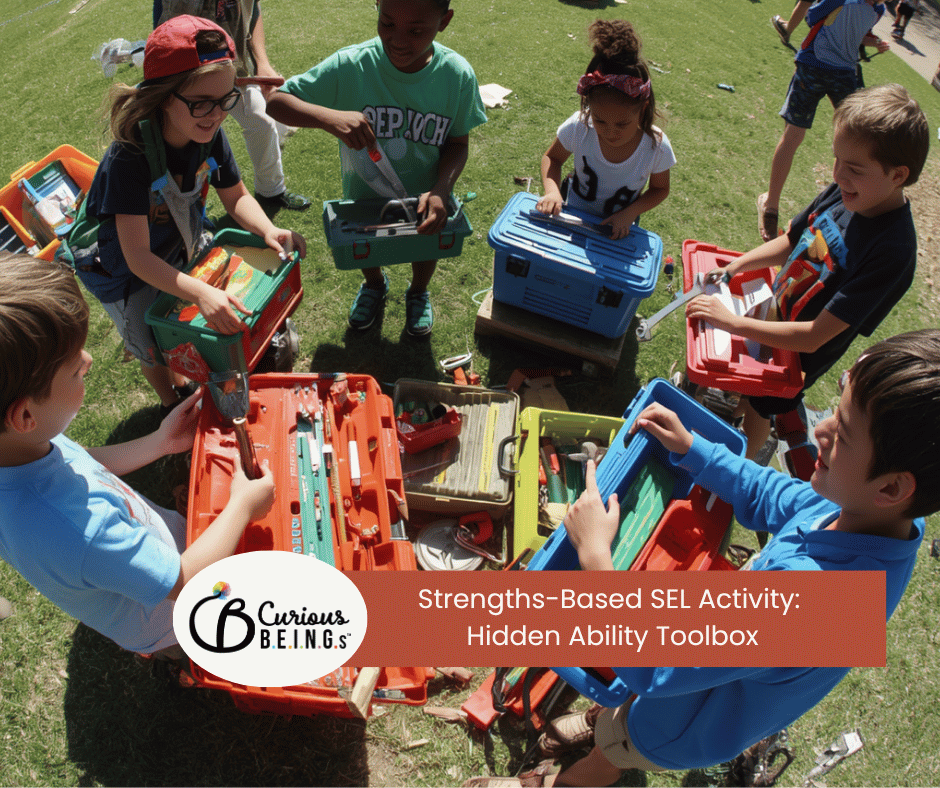
Every student has abilities; some of them may not be as easily seen. The Hidden Abilities Toolbox is a hands-on, strengths-based SEL activity for Kindergarten - 2nd grade. It helps students name what makes them unique, and then encourages them to see special qualities in others. Plan for about 30-45 minutes. It works as a standalone lesson or as part of a broader SEL unit. It also works well at home with a small group of kids.
Hidden Abilities are strengths that aren't immediately obvious, either to others or to the child themselves. They may not show up in grades or typical classroom performance. Even so, they're just as real and just as worth naming. For young learners, helping them see these less visible strengths is one of the most powerful things an educator can do for their confidence and sense of belonging.The Hidden Abilities Toolbox activity is a playful, tactile way to begin that journey.
Start by having students decorate their small box with whatever craft supplies are available. This becomes each student's personalized Hidden Abilities Toolbox. Encourage them to make it as expressive and unique as they are. The decorating process is itself a moment of self-expression — a signal that their version of this box is unlike anyone else's.
Next, place a small mirror inside each box. Ask students to look into it and think about what makes them special — not just what they're good at in school, but who they are. What do they love? What do people always come to them for? What lights them up? Have students jot down or draw these qualities on an index card and place it in the box.
Prompt for Kindergarten: "What's something you love to do that makes you feel really good?" Prompt for Gr. 1–2: "What's something you can do that you don't think other people notice? That's a hidden ability."
By now, students have decorated their box and reflected on what makes them unique. This step takes their thinking a little further. Ask each student to write or draw one hidden ability they want to put in their Toolbox — it can be something from the mirror reflection, something that came up while decorating, or something brand new. Anything counts: drawing, singing, storytelling, sports, making people laugh, organizing things, taking care of animals, or noticing when someone is sad.
Remind students there are no wrong answers. The goal is honest self-discovery.
Now, invite students to share their hidden ability with the group. Before they begin, set the tone together: "In this classroom, we celebrate each other. Our job is to listen and cheer."
This is where the magic happens. Students often hear their peers name things they'd never thought to say out loud — and recognize them instantly as true.
Finally, draw names from a hat. Each student writes or draws an appreciation note for the classmate they drew. The note highlights the hidden abilities they noticed during the activity. These notes go into each student's Hidden Abilities Toolbox.
Want to go deeper? Add a musical discovery round between Steps 2 and 3. Create a short playlist of diverse music — something upbeat, something slow, something from a different culture or genre than your students usually hear. Play a snippet of each song and ask:
"How does this song make you feel? Show me — you can dance, draw, or write it down."
This helps students connect with their emotional responses and often surfaces unexpected hidden abilities: the student who starts choreographing, the one who listens with total stillness and then describes the feeling perfectly. A 2021 systematic review published in Environmental Research and Public Health found that using music in education for children ages 3–12 can positively support emotional intelligence — improving emotional perception, expression, and regulation — as well as boosting creativity and prosocial skills.
Strengths-based SEL activities are increasingly recognized as more effective than deficit-focused models — especially for diverse learners. When students learn to identify and articulate their hidden abilities early, research shows improvements in self-confidence, peer relationships, and academic engagement.
CASEL — the Collaborative for Academic, Social, and Emotional Learning — identifies self-awareness as the foundational competency of SEL, defining it as the ability to recognize one's emotions, thoughts, and hidden abilities and understand how they influence behavior. The Hidden Abilities Toolbox activity is a hands-on entry point into exactly that competency.
The broader evidence for SEL is strong. A landmark 2011 meta-analysis published in Child Development by Durlak, Weissberg, and colleagues studied 213 school-based SEL programs and more than 270,000 students. They found that SEL participants showed an 11-percentile-point gain in academic achievement compared to peers who did not participate. Students also showed meaningfully improvements in social skills, attitudes, and behavior.
In addition, the Greater Good Science Center at UC Berkeley notes that students with strong social-emotional skills perform better in school. They also have stronger relationships with peers and teachers, experience greater well-being, and are less likely to engage in risky behavior — these benefits extend well into adulthood.
The Curious B.E.I.N.G.s is a disability-informed, strengths-based SEL program that has been implemented in 18 schools across 7 states, reaching more than 1,800 students, with 91% of teachers saying they would recommend it. Teachers report students using lesson language to navigate conflicts, improved collaboration, and increased peer inclusion — outcomes rooted in exactly this kind of self-discovery work.
Q: What grade level is the Hidden Abilities Toolbox activity appropriate for?
A: The Toolbox activity is designed for Kindergarten through 2nd grade. For 3rd–5th grade, see the age-appropriate alternatives in the section above — the same hidden abilities work, adapted for older learners.
Q: How long does the Hidden Abilities Toolbox activity take?
A: Plan for 45–60 minutes for the full activity, including decorating time. For a shorter version, skip the decorating step and use a plain box or folder instead — that brings it down to about 20–30 minutes. The optional Musical Discovery add-on adds approximately 10–15 minutes.
Q: Where does this fit in a school day?
A: It fits naturally into a dedicated SEL block, morning meeting, or advisory period. It also works well as a back-to-school community-building activity at the start of the year.
Q: What is a strengths-based SEL activity?
A: A strengths-based SEL activity helps students identify, name, and build on what they do well — rather than focusing only on gaps or challenges. The Hidden Abilities Toolbox is one example: a tactile, K–2 activity that surfaces student strengths and guides them from self-discovery to peer recognition. As CASEL's framework makes clear, self-awareness — including recognizing one's own hidden abilities — is the foundational competency from which all other social-emotional skills grow.
